The Strategic Significance of the WASD Keys
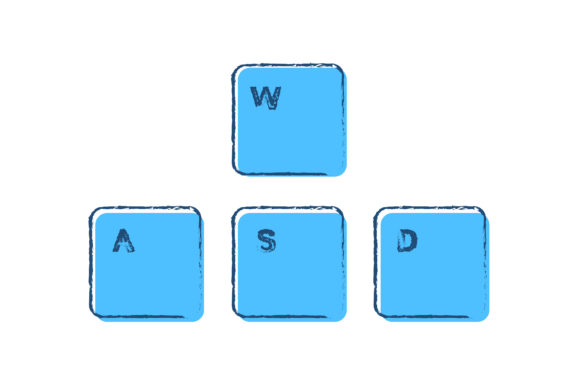
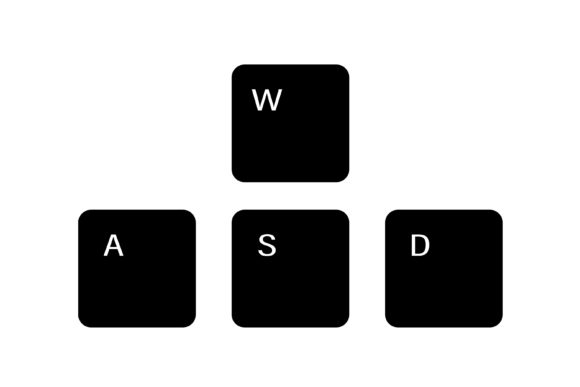
In the hyper-competitive landscape of modern gaming, control is paramount. While a full keyboard offers a vast array of inputs, a specific cluster—the W, A, S, and D keys—has ascended beyond its mechanical function to become a cornerstone of digital interaction. This Set of Gaming Keyboard Keys A W S D represents more than just movement; it embodies a principle of focused, intuitive control. For professionals, creators, and decision-makers outside the gaming arena, understanding this configuration offers a powerful metaphor for strategic navigation and operational efficiency in complex environments.
Beyond Movement: WASD as a Framework for Control
The WASD layout is a deliberate design choice, a standardized convention that maps directional movement to a compact, ergonomic cluster. This is not random placement. It creates a tactile anchor point, a dedicated zone of high-frequency interaction. The strategic utility lies in its consolidation of primary functions into an accessible, predictable pattern. In business and creative workflows, we often grapple with sprawling tool sets, overwhelming data dashboards, or convoluted software interfaces. The principle of WASD challenges us to ask: What are our core directional controls? Which essential functions deserve this level of prioritized, ingrained access?
Thoughtful adoption of a WASD-like mindset can directly support planning and productivity. By identifying and clustering your most critical actions—your "move forward," "step back," "look left," and "look right" commands—you streamline decision-making. This reduces cognitive load, minimizes friction in operational execution, and accelerates learning curves for new systems or projects. For an entrepreneur, these keys might be the core metrics monitored daily. For a content creator, they could be the primary editing tools used in every project. The Set of Gaming Keyboard Keys A W S D teaches us to build our own control clusters.
Intentional Application: Mapping WASD to Professional Goals
Relying on a scattered, ad-hoc approach to tools and information is akin to using a full keyboard with no standardized controls—inefficient and prone to error. Applying the WASD principle intentionally requires a audit of your recurring tasks.
Identifying Your Core Operational Directions
Begin by defining your professional "movement" axes. What action represents Forward (W)? This is often your primary value-creation task: drafting a proposal, coding a core feature, or executing a key marketing campaign. Backward (S) might be review, analysis, or reflection—the necessary pause to assess progress. Left (A) and Right (D) can represent lateral shifts: exploring alternative strategies, adjusting parameters, or communicating with adjacent teams. By clustering the tools, shortcuts, or data points for these actions, you create a personalized command center.
- Example for a Project Manager: W could map to the project advancement tracker, S to the risk register, A to the stakeholder communication log, and D to the resource allocation dashboard. Keeping these "keys" always at hand ensures constant, fluid navigation of the project landscape.
- Example for a Digital Marketer: Forward (W) is the content publishing calendar, Backward (S) is the performance analytics suite, with A and D being competitor analysis and audience sentiment tools respectively.
The Risks of Uncontextualized Adoption
While the concept is powerful, implementing a rigid WASD framework without clear goals carries risk. The first pitfall is misidentification. Assigning a trivial task to your "W" key—your primary forward motion—will not drive meaningful results. The second is isolation. A control cluster must interact with the wider system; over-focusing on just four inputs can blind you to peripheral opportunities or threats. Finally, there is the risk of stagnation. Standardization benefits consistency, but environments evolve. Your core directional keys might need remapping quarterly or annually as objectives shift. The Set of Gaming Keyboard Keys A W S D is a dynamic template, not a static rule.
Planning for Strategic Navigation
Before committing to your operational WASD, conduct a planning session. List your high-frequency actions. Categorize them by strategic intent: which drive advancement, which facilitate correction, which enable exploration? Evaluate their current accessibility. Are these actions buried in menus, or are they at your fingertips? The goal is to reduce the steps to execute your most critical maneuvers. This planning exercise itself enhances your meta-awareness of how you work, leading to more deliberate and effective routines.
Long-Term Value in Mastery and Fluency
The ultimate value of mastering any control scheme, whether on a gaming keyboard or in a business platform, is fluency. Fluency eliminates the barrier between intention and action. When your essential controls are second nature, your energy is directed toward outcomes, not operations. This long-term benefit impacts creativity—you can iterate faster; customer experience—you can respond more swiftly; and branding—you can execute your core message with consistent precision. The isolated, focused nature of the WASD cluster, free from peripheral clutter, is what enables this mastery. In a professional context, achieving similar fluency with your key tools is a competitive advantage.
Consider the communication advantages. When a team adopts a shared understanding of "what our W key is," alignment improves. It creates a common strategic vocabulary focused on core movements. This clarity reduces miscommunication and ensures that everyone is applying pressure to the correct keys to move the collective project forward.
Grounding the Strategy in Realistic Use
This is not about literally remapping your keyboard. It is a strategic observation about interface design, priority management, and cognitive ergonomics. Many software applications already allow for custom shortcut keys. Use that functionality to create your cluster. Dashboard builders let you pin core widgets. Use that to assemble your directional overview. The physical Set of Gaming Keyboard Keys A W S D on a white background symbolizes clarity and isolation—the keys are distinct, important, and set apart from noise. Your most vital business indicators and actions deserve the same treatment.
Approach this not as a rigid template, but as a heuristic for efficiency. Regularly ask: "Are my most important controls as accessible and logical as WASD?" If the answer is no, you are likely incurring strategic latency—the delay between seeing a need and acting upon it. In fast-moving markets, that latency is a direct cost. By adopting the intentional, clustered control philosophy exemplified by these four keys, you invest in reducing that cost, enhancing your agility, and ultimately securing better results through more deliberate and frictionless command of your domain.